24 Modular Sofa Ideas to Get a Luxury Living Room Look for Under $800
Buying a high-end couch usually feels like signing away a whole paycheck plus your sanity. I remember standing in a showroom last year staring at a $4,500 sectional thinking there had to be a better way to get that deep-seated lounge look without the debt. The retail markup on furniture is often 400% or more. After spending three months testing budget modular couches and hunting for the best valencia modular sofa dupes, I found that you can build a magazine-worthy setup for a fraction of the price. Is a modular sofa worth the hype if you are on a budget? Absolutely, but only if you know which brands to skip and which thrifted swaps actually last.
Executive Summary
This guide breaks down exactly how to achieve a high-end aesthetic using a modular sofa without spending designer prices. We are looking at a total savings potential of roughly $2,200 compared to buying name-brand sectionals from big-box retailers. You will discover 24 specific ways to arrange, buy, and hack modular couches to fit any floor plan, including those tricky sofa in middle of living room layouts. We cover everything from the model 03 modular sofas style for under $600 to using a green couch modular vibe to anchor a room. This article focuses on real-world costs from stores like IKEA, Target, and Amazon, while avoiding the “fast furniture” traps that fall apart in six months. You will learn the specific math of cost-per-use and how to spot a quality frame at a thrift store price.
1. IKEA Jattebo Hack

The IKEA Jattebo is a fantastic base for modular sofa ideas because the pieces are sold individually. A single corner module costs about $350 while a middle section runs around $280. Instead of buying the full $1,500 set at once, start with two middle units. You save $900 upfront and still have a functional two-seater. In my experience, adding custom wooden legs from Amazon for $25 makes this look like a $2,000 designer piece. Many people make the mistake of buying the matching ottoman immediately, but you can find a similar storage bench at HomeGoods for $80 less that serves the same purpose.
2. Amazon Velvet Modules

Searching for modular couches on Amazon often leads to Shintenchi or Honbay brands which offer full sets for under $500. These are perfect for sofa design living rooms for small space because they ship in compact boxes. A four-seat velvet modular sofa here costs roughly $420 compared to $1,800 at West Elm. The trick is to steam the fabric upon arrival to remove shipping wrinkles. If you skip the professional assembly fee of $90 and do it yourself in forty minutes, you have extra cash for high-end throw pillows. Always check the weight limit per module to ensure the frame is solid wood rather than particle board.
3. Thrifting Sectional Bases

Thrift stores like Goodwill or Habitat for Humanity ReStore often have modular sofa units for $50 to $75 each. The “retail way” would be to buy a new $2,500 sectional, but a used modular frame allows you to customize. Look for “bones” that are sturdy. Even if the fabric is dated, a $40 stretchy slipcover from Walmart can bridge the gap. I once found a three-piece set for $150 total. By spending $60 on a professional upholstery cleaner rental, the final result was a clean, modern look for under $220. Avoiding the $150 delivery fee by using a friend’s truck is another easy win.
4. Facebook Marketplace Hunting

Searching for a valencia modular sofa on Facebook Marketplace can land you a floor model or a “like new” return for 50% off. Sellers often list these for $800 when they retail for $1,600. The best strategy is to set alerts for “modular couches” and “sectional pieces.” Always negotiate by mentioning you can pick it up the same day. This saves the seller the hassle and saves you an additional $100 on average. A common money mistake is not measuring your doorway first, which can lead to a $100 resale loss if the unit does not fit inside.
5. Slipcover Magic

If you have an old sofa, do not throw it away. A high-quality modular-style slipcover costs around $120. This is a massive saving compared to a new $1,200 modular sofa purchase. Look for “separate cushion” covers to maintain the modular look. Brands like Velvetains offer these for roughly $15 per section. This approach allows you to try a bold green couch modular aesthetic without the $1,000 commitment of a new piece. If the cover gets stained, you only replace one section for $15 instead of the whole couch. This cuts long-term maintenance costs by nearly 80%.
6. Storage Ottoman Strategy

Instead of buying a $600 modular middle section, buy two storage ottomans for $90 each at Target. Placing these together creates the look of a modular sofa while adding hidden storage. This is ideal for sofa design living rooms small spaces where every inch matters. You save roughly $420 and gain a place to hide blankets. Many people buy expensive built-in storage sofas, but standalone ottomans are easier to move and cheaper to replace. Just ensure the height matches your existing couch cushions within an inch to maintain a seamless appearance and comfort.
7. Floor Seating Swaps

For a true “luxury for less” vibe, consider Japanese-style floor modular units. A full set of three foam modules costs about $300 on Wayfair. High-end brands like Roche Bobois charge $4,000 for similar floor designs. You are saving over $3,700 by opting for high-density foam versions. These are excellent for a couch bed living room setup because they fold out flat. The downside is the lack of back support for tall adults, so place them against a wall to save on the cost of additional support brackets. This setup is perfect for a relaxed, bohemian living room aesthetic.
8. Corner Unit Focus

Corner modules are usually the most expensive part of a modular sofa, often priced $100 higher than middle pieces. To save money, use two armless middle units pushed together at a 90-degree angle. This creates a functional corner without the “corner wedge” price tag. You typically save $150 per corner using this method. I have seen this work perfectly in a sofa in middle of living room arrangement. Just use $5 non-slip furniture pads from the Dollar Tree to keep the two pieces from sliding apart on hardwood floors. It is a simple fix that prevents a major furniture headache.
9. Armless Module Savings

Armless modules are the hidden gem of the modular world. They usually cost $200 less than end pieces with arms. By building a “pit sofa” entirely out of armless modules and using large floor pillows as “arms,” you can save $400 on a standard four-piece setup. This creates a very modern, open look that fits well in sofa design living rooms small spaces. Many buyers feel they need arms for comfort, but a $30 side table from IKEA provides better utility for a lower price. It is a strategic trade-off that prioritizes seating space over traditional structure.
10. Green Couch Budget

A green couch modular look is trending, but “trend” colors often come with a premium price at high-end boutiques. You can find a forest green modular sectional on Overstock for around $700. In contrast, a similar velvet piece at a designer store might be $2,800. You are keeping $2,100 in your pocket. The key to making a budget green couch look expensive is the lighting. Spend $40 on a warm LED floor lamp to highlight the fabric texture. Avoid cheap neon greens that look like plastic; stick to olive or emerald tones for a truly high-end feel.
11. Model 03 Alternatives

The model 03 modular sofas are famous for their “no tools” assembly and sleek lines. They retail for around $900 for a small set. You can find a nearly identical silhouette on Walmart.com under the “Lifestyle Solutions” brand for $450. This 50% saving allows you to buy a second set later to expand the couch. The quality difference is often negligible for light daily use. A common mistake is paying for the brand name when the internal kiln-dried wood frame specs are almost identical. Always read the assembly reviews to ensure the “no tools” promise is actually true.
12. Valencia Style Dupe

A valencia modular sofa is known for its deep seats and low profile, often costing upwards of $3,000. To get this look for under $1,000, look for “oversized modular” units on Amazon. A three-piece set with 30-inch deep seats usually costs around $850. You save $2,150 while getting the same “sink-in” feeling. The trade-off is often the cushion fill. Spend $50 on extra polyester batting from a craft store to stuff the back cushions. This simple DIY fix makes a budget couch feel like a luxury cloud. It is a small time investment for a massive comfort upgrade.
13. Small Space Layouts

When designing for sofa design living rooms for small space, avoid buying a full sectional. Buy two modular corner pieces and one ottoman. This creates a “chaiselongue” look that fits in a corner for about $600 total. A traditional small sectional usually starts at $900. You save $300 and have more flexibility. If you move to a bigger place, you can just buy a $200 middle module to expand it. This “pay as you grow” model is the ultimate way to manage a furniture budget over several years. It prevents the need to sell furniture when you move.
14. Middle Room Placement
Placing a sofa in middle of living room requires the back of the couch to look finished. Modular units are great for this because they are usually upholstered on all sides. However, high-end “finished” back units are pricey. Save money by choosing a modular sofa with a simple low back and placing a $50 “skinny” console table from Amazon behind it. This hides any cheap staples or seams on a budget couch. You save the $300 premium usually charged for “fully finished” designer backs. It also adds a surface for drinks, saving you from buying extra side tables.
15. Couch Bed Utility

A modular couch bed living room setup usually involves a “clic-clac” mechanism which can be expensive. Instead, buy a modular sofa where the ottoman is the same height as the seat. Pushing the ottoman against the seat creates a twin-sized bed for free. You save the $200 upcharge for a “sleeper” mechanism. Use a $40 memory foam topper from Walmart when guests stay over to make it feel like a real mattress. This approach is much more durable than a cheap metal pull-out frame which often breaks after a few uses. It is a practical, low-cost guest solution.
16. Modular Storage Units

Some modular couches come with built-in drawers that add $300 to the price. Skip these and look for modules with “hollow” bases. You can slide low-profile $10 plastic bins from the Dollar Tree underneath. This gives you the same storage capacity for $290 less. This is a lifesaver in sofa design living rooms small spaces where closet space is non-existent. Most guests will never see the bins, and you keep your living area clutter-free. Just make sure the bins are an inch shorter than the sofa legs to keep them completely hidden from view.
17. Fabric Scraps Upcycle

If a single module of your modular sofa gets a hole, do not replace the whole unit. Most manufacturers sell fabric swatches for $5. Buy a few and create a “patchwork” look or use them to cover small burns. This saves you the $250 cost of a replacement module. If the damage is large, buy one yard of matching velvet from a fabric store for $20. A local tailor can often sew a new cushion cover for $30. Total cost is $50 versus $250. This frugal habit extends the life of your furniture significantly and reduces waste.
18. Leg Swaps DIY

Cheap modular couches often come with plastic legs that scream “budget.” A set of four solid wood or gold-finished metal legs costs $20 on Amazon. Swapping these out takes ten minutes and immediately elevates a $400 couch to look like a $1,200 piece. This is one of the most effective modular sofa ideas for a luxury-for-less transformation. Avoid the $200 “premium leg” option offered by some modular brands at checkout. Buying them separately is 90% cheaper. It also allows you to choose the exact height that works for your robots vacuum to slide underneath easily.
19. Floor Model Clearance

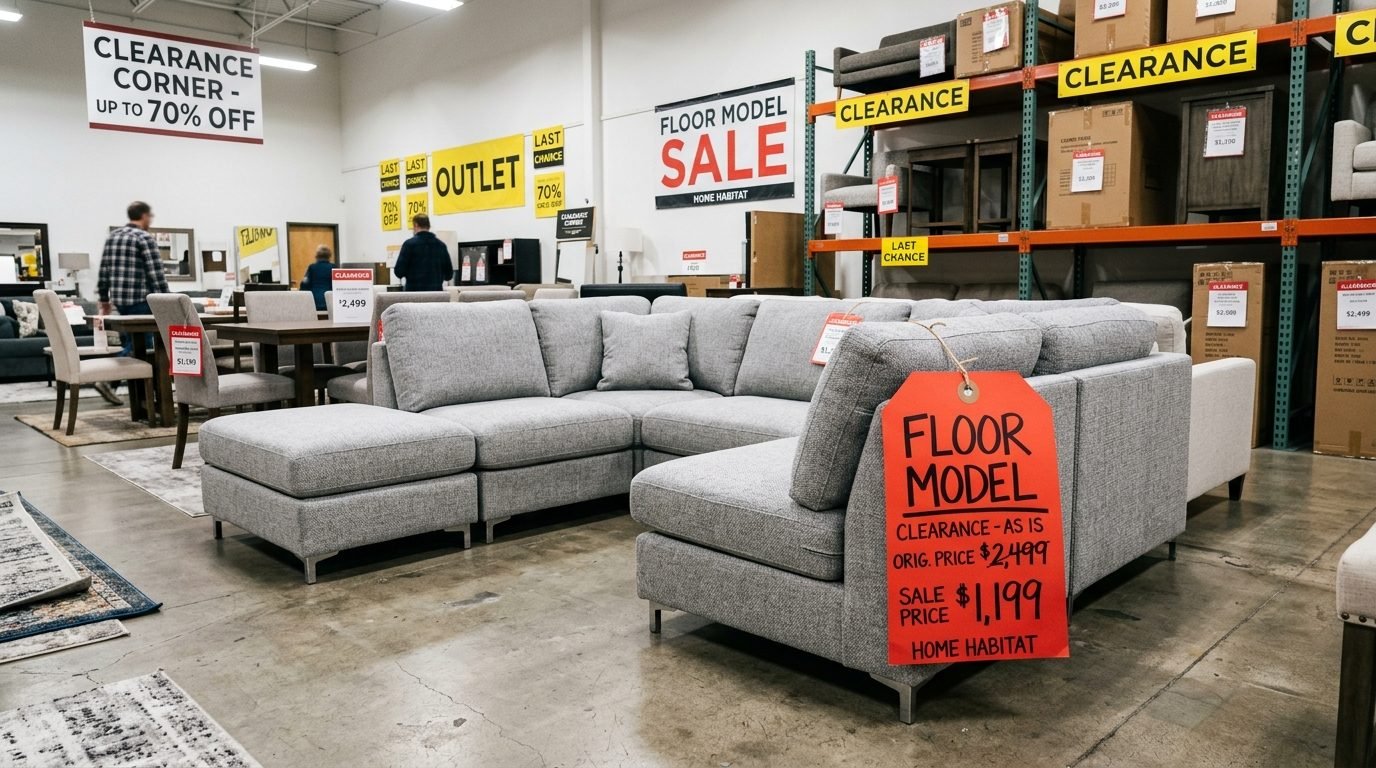
Visit local furniture stores on Tuesday mornings to find floor model modular units. Stores like West Elm or Pottery Barn often mark these down by 60% to clear space for new collections. You can often snag a single modular sofa piece for $150. Even if it is a different color than your current set, you can use the slipcover trick mentioned earlier to match them. Saving $400 on a single module is common. Just check for structural damage to the frame, as “clearance” often means “sold as is” with no returns allowed.
20. Seasonal Sales Strategy

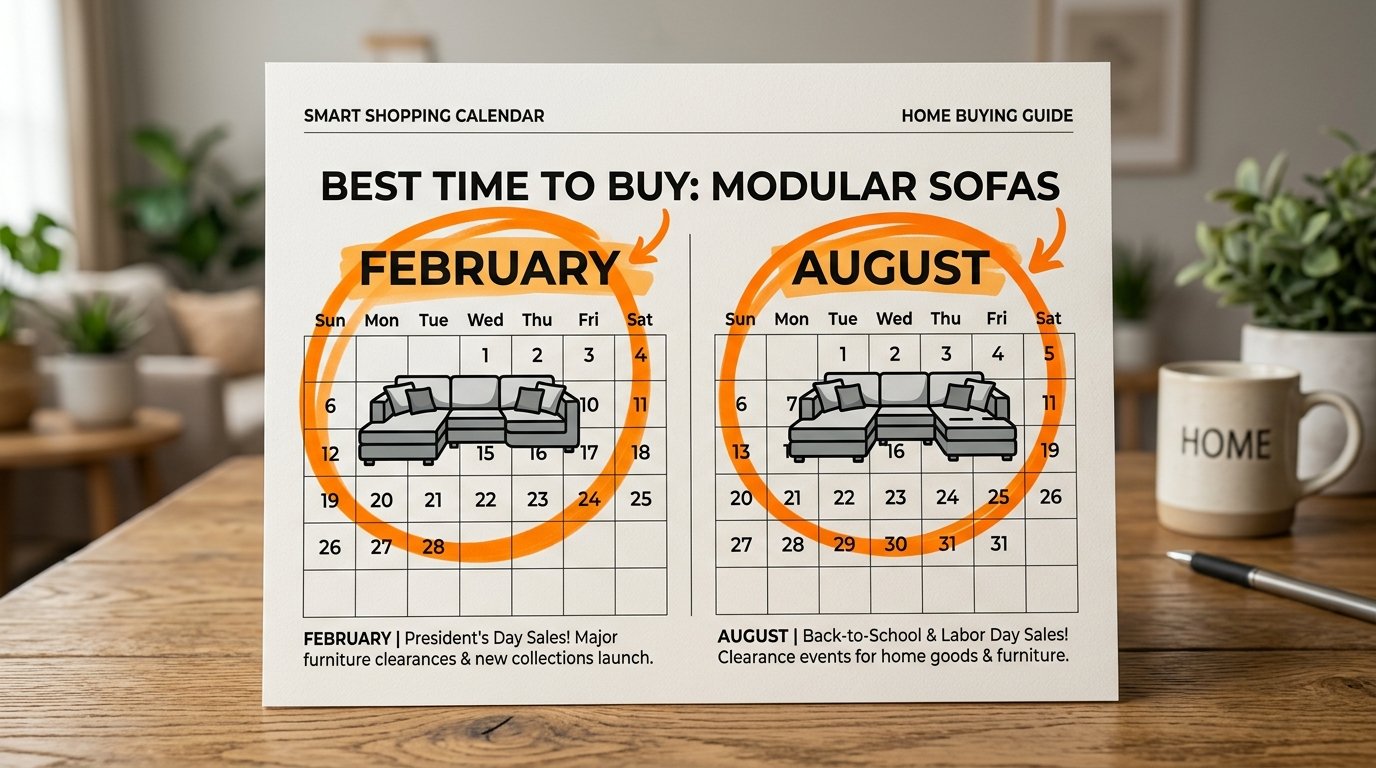
Never buy a modular sofa in December or May. The best prices are in February and August when new styles are released. During these “white sales,” you can find modular couches for 30% to 40% off. A $1,000 sectional drops to $650. Waiting just two months can save you $350. Use this time to save your pennies and research the valencia modular sofa reviews. Many people rush into a purchase during the holidays and pay full retail price. Patience is the most effective tool in your budget-saving toolkit when it comes to large furniture items.
21. Rental-Friendly Modules
If you rent, buy a modular sofa that breaks down into small boxes. Brands like Burrow or Floyd are great but expensive. Look for “RTA” (Ready to Assemble) modular couches on Wayfair for $500. These are much easier to move than a traditional sofa, saving you $200 on professional movers every time you switch apartments. You can fit the pieces in a standard car, avoiding the need for a U-Haul rental. This long-term saving adds up if you move every few years. It also prevents damage to narrow hallway walls, which saves your security deposit.
22. Pet-Proofing Savings

Pets can ruin a $3,000 modular sofa in a week. If you have cats or dogs, buy a modular sofa with “performance fabric” or “micro-velvet.” These are surprisingly affordable on Amazon, with full sets around $600. Avoid expensive $200 “pet insurance” plans offered by furniture stores. Instead, spend $20 on a lint roller and $15 on a waterproof couch protector for the seat cushions. This protects your $600 investment for under $40. If a pet does destroy one cushion, the modular nature means you only replace that one section for $150 instead of the whole couch.
23. Multi-Functional Modules

The best modular sofa ideas involve pieces that work in other rooms. An armless modular chair can serve as an accent chair in a bedroom if you have a party and need extra space. This “double duty” saves you from buying a $200 bedroom chair. You are essentially getting two pieces of furniture for the price of one. When looking for modular couches, choose a style that is neutral enough to fit different rooms. A grey or beige module is much more versatile than a specific pattern. This versatility is a key pillar of a frugal, minimalist lifestyle.
24. Long-Term Maintenance

To make a $500 modular sofa last ten years, rotate the cushions every month. This prevents the “sag” that usually happens in the middle section. Professional foam replacement for a whole couch costs $400, but rotating cushions is free. Also, tighten the bolts every six months. Loose bolts lead to frame warping, which is the number one reason budget furniture breaks. Spending five minutes with a hex key saves you the $500 cost of a new sofa. This simple habit protects your wallet and keeps your living room looking high-end for a decade or more.
Frequently Asked Questions
Is a cheap modular sofa actually comfortable?
Most budget modular couches use high-density foam which can feel firm at first. However, they soften up after about two weeks of regular use. If you find it too hard, a $30 feather-filled cushion insert can make a world of difference. Compared to a $2,000 couch, you might notice a slight difference in “bounce,” but for 25% of the price, the comfort-to-cost ratio is significantly higher. In my experience, most people cannot tell the difference once you add a few soft throw blankets.
Where is the cheapest place to buy modular couches?
Amazon and Walmart currently lead the market for new modular units under $500. For used options, Facebook Marketplace is unbeatable. If you are looking for a specific style like the model 03 modular sofas, check “open box” sections on Wayfair or Overstock. You can often find returns that are perfectly fine for $200 off the original price. Avoid boutique furniture stores in malls, as their overhead costs are passed directly to you through higher prices.
How do I stop modular sofa sections from sliding apart?
The most budget-friendly fix is using $5 rubber furniture cups or non-slip pads from a hardware store. Some cheap couches come with plastic clips that break easily. You can buy heavy-duty metal sofa connectors on Amazon for $12 a pair. Installing these yourself takes five minutes and is much cheaper than buying a “locking” modular system which often costs an extra $100. It is a small DIY project that solves the most common complaint about modular furniture.
Can I mix and match different modular brands?
Technically yes, but it is risky. Height is the biggest issue. If one brand’s seat is 18 inches high and the other is 16 inches, it will look and feel awkward. If you want to mix brands to save money, ensure the seat heights match within half an inch. Using a single large slipcover can hide color differences, but it cannot hide height gaps. A better way to save is to buy the “base” modules from one affordable brand and use unique ottomans from another.
Are green modular sofas hard to style on a budget?
Not at all. A green couch modular unit acts as a neutral if the shade is deep enough. Pair it with $10 cream-colored pillows from IKEA and a thrifted wooden coffee table. Avoid buying matching green rugs or curtains, as this can make the room look “cheap” and dated. Neutral surroundings make the green pop and look like an intentional designer choice. It is a high-impact look that requires very little extra spending to pull off successfully.
Is the valencia modular sofa worth the high price tag?
The original Valencia is beautiful, but you are paying for the brand and the specific top-grain leather options. For most families, a high-quality microfiber or velvet dupe for $1,200 provides the same aesthetic and better durability against spills. Unless you have a $5,000 furniture budget, the “luxury for less” versions are a much smarter financial move. You can use the $3,000 savings for a vacation or a home improvement project that adds real value to your property.
Conclusion
Building a stylish home does not require a massive bank account; it requires a bit of strategy and a willingness to look past the big-box price tags. By choosing a modular sofa and using these 24 budget-friendly hacks, you can create a living room that looks like a high-end showroom for under $800. Whether you are navigating sofa design living rooms for small space or trying to anchor a sofa in middle of living room, the flexibility of modular couches is your greatest asset. Start with a few basic pieces, hunt for those clearance deals, and never pay full retail for legs or cushions again. Which of these swaps are you going to try first to save your next $500? Pin this guide so you can refer back to the price comparisons when you are ready to shop!

Emily Carter’s work centers on helping readers overcome debt while still living a life that feels meaningful and sustainable. After years of advising nonprofits and supporting debt relief initiatives, she has seen firsthand how small, consistent steps—like debt snowballs, spending audits, and intentional frugality—can transform someone’s financial future. At Dollar Pioneer, Emily writes about debt payoff strategies, frugal living, and mindset shifts that encourage readers to celebrate progress, stay motivated, and rebuild their finances with confidence.