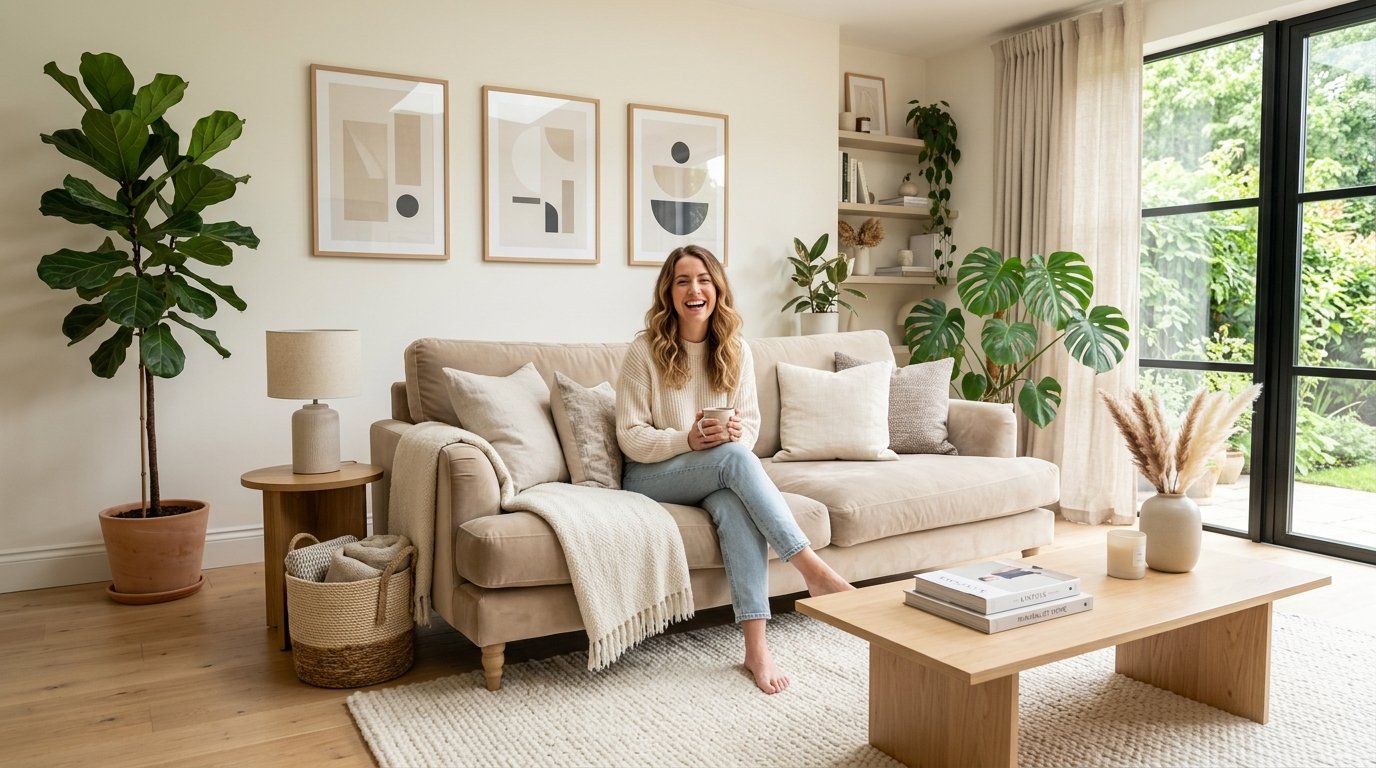
24 Living Room Designs That Will Save You Over $2,000 This Year
Three years ago, I stared at a $4,500 quote from a local interior designer and felt my stomach drop. I wanted that high-end, magazine-worthy aesthetic, but my bank account was screaming for mercy. Was it actually possible to achieve a designer look without the designer debt? I decided to find out by tracking every cent spent on my own space. By swapping brand-name velvet sofas for marketplace finds and mastering a few DIY paint techniques, I realized the “retail way” is often a tax on the impatient. Are you tired of feeling like luxury is gatekept by a price tag? What if you could cut your decorating costs by 70% without sacrificing a single ounce of style?
Executive Summary
Achieving breathtaking living room designs doesn’t require a massive inheritance or a credit card maxed out at a high-end showroom. This guide provides a strategic roadmap to saving roughly $2,150 on your next refresh by focusing on “luxury for less” principles. We will explore how to master a minimalist interior design aesthetic that prioritizes quality over quantity, and how to execute a room makeover inspiration plan using high-impact, low-cost swaps. You will discover how to navigate the price gaps between big-box retailers and thrifted treasures, with specific price comparisons for everything from lighting to textiles. We cover 24 distinct areas of the home—from the hall interior to specialized ceiling design living room ideas—while intentionally excluding structural renovations that cost more than they return in value. By the end of this article, you will have a specific budget-friendly blueprint to transform your house living room into a modern masterpiece for a fraction of the traditional cost.
1. Thrifted Textiles

Textiles are the easiest way to soften a room, but buying new linen or wool can cost upwards of $150 per throw. In my experience, high-end shops like West Elm or Pottery Barn charge a premium for “distressed” looks that you can find at Goodwill for $8. Look for oversized wool blankets or vintage silk scarves that can be draped over a sofa. A common money mistake is buying cheap polyester throws that pill after two washes; instead, hunt for natural fibers secondhand to get that luxury feel for under $10.
2. Statement Greenery

Plants breathe life into living room designs, but a large Fiddle Leaf Fig at a boutique can run you $200. I’ve found that IKEA or Home Depot offers the same species for about $45. If you want to go even cheaper, join a local “Buy Nothing” group on Facebook. Many neighbors give away cuttings for free. One practical action: buy a small $15 Monstera and “up-pot” it yourself using a thrifted ceramic crock. You save over $100 compared to buying a mature plant in a designer pot.
3. Lighting Layers

Standard hall design often relies on a single, harsh overhead light. To create a modern house decor vibe, you need layers. A high-end arched floor lamp usually costs $400, but Amazon has “dupes” for $85 that look identical once assembled. Avoid the money trap of buying “smart” bulbs for every fixture; use a simple $5 plug-in dimmer switch on a standard lamp to get the same mood lighting for much less. This single swap can save you $300 across the room.
4. Paint Magic

A fresh coat of paint is the ultimate room makeover inspiration. While a professional painter might charge $800 for a single room, doing it yourself costs about $60 in supplies. Use a “luxury for less” trick by choosing a sophisticated taupe or charcoal from the “mistake” shelf at Lowe’s—often discounted by 50% or more. The catch is being flexible with the exact shade, but the savings of $700+ make it worth the compromise.
5. Gallery Walls

Art is often the most expensive part of living room decor modern styles. Instead of buying framed prints for $200 each, use digital downloads from Etsy for $5. Print them at a local pharmacy for $2 and use thrifted frames painted a uniform matte black. This creates a cohesive minimalist interior design look for about $40 total, whereas a pre-curated gallery set from a boutique would easily top $600.
6. Rug Layering

Large 9×12 rugs are notoriously pricey, often exceeding $800 for decent quality. To save, buy a large, inexpensive jute rug (around $150) to cover the floor, then layer a smaller, high-quality vintage rug ($50 from a flea market) on top. This “save vs. splurge” hybrid gives you the high-end texture of a large wool rug for a 75% discount. Don’t fall for the trap of buying “washable” rugs that lose their shape; a sturdy jute rug lasts longer and costs less per year of use.
7. Hardware Swaps

If your hall interior feels dated, don’t replace the furniture. Swap the hardware. Replacing basic plastic or wooden knobs with brushed brass or matte black handles can make a $100 IKEA cabinet look like a $1,200 custom piece. You can find packs of 10 modern handles on Amazon for $25. This 10-minute task provides an immediate ROI and prevents you from spending hundreds on new storage solutions.
8. Mirror Placement

Mirrors reflect light and make a small house design feel twice as large. A massive floor mirror from a luxury brand costs $500+. I found that leaning two $15 full-length mirrors from Target side-by-side and framing them with simple wood trim creates a “custom” oversized look for under $50. This avoids the money trap of buying heavy, expensive glass that requires professional installation.
9. Architectural Trim

Adding “picture frame” molding to your walls creates a modern house decor feel instantly. Buying pre-made panels is expensive, but using simple wood lath or PVC strips from a hardware store costs about $0.50 per foot. For a standard living room, you can add sophisticated wall texture for under $100. Hiring a contractor for this would easily cost $1,500 in labor alone.
10. Sofa Refresh

Before spending $2,000 on a new couch, consider a high-quality slipcover. Companies like Bemz or Comfort Works make custom covers for IKEA frames that cost around $200. It’s a “luxury for less” move that saves you $1,800. A common mistake is buying a cheap, one-size-fits-all cover that looks messy; spend the extra $50 for a tailored fit and your house living room will look brand new.
11. Ceiling Accents

We often forget the “fifth wall,” but a ceiling design living room focus can transform a space. Instead of expensive coffers, use paint to create a “tray” effect for the cost of one gallon ($40). This adds depth and a modern house decor edge without the $2,000 price tag of professional drywall work. One practical action: paint your ceiling two shades lighter than your walls to make the room feel taller for free.
12. Coffee Table DIY

A solid marble coffee table is a staple of minimalist interior design but usually costs $900. You can achieve this look by buying a $40 secondhand wooden table and applying high-quality marble contact paper or “stone” spray paint ($15). The trade-off is durability, but for a 95% savings, it’s a brilliant way to test a trend before committing to a splurge.
13. Window Treatments

Custom drapes are a hidden money pit, often costing $500 per window. For a budget-friendly alternative, use $25 IKEA RITVA curtains. They are heavy cotton and look much more expensive than they are. The pro trick: hang the rod 6 inches above the window frame and 8 inches wider on each side. This creates an expensive “custom” look for a fraction of the cost.
14. Bookshelf Styling

Empty shelves look cheap, but buying “decor” items can get expensive fast. Use what you have. Turn book spines inward for a neutral, minimalist interior design palette. Group objects in threes. Use old glass jars spray-painted matte white as vases. This costs $0 but creates a room makeover inspiration look that usually requires a $200 trip to a home goods store.
15. Scent Branding

Luxury homes always smell like expensive candles (which cost $70 each). Instead, use a $20 essential oil diffuser and a “hotel” blend. It lasts longer and costs about $0.10 per use compared to the $2-per-hour burn rate of high-end wax. This is a subtle way to elevate your living room decor apartment style without the recurring expense of luxury candles.
16. Seasonal Swaps

For winter home decor, don’t buy new furniture. Swap your lightweight cotton pillow covers for velvet ones. You can find sets on Amazon for $15. Stores like Target often mark these down by 70% at the end of the season. Avoid the money trap of buying “holiday-specific” decor; stick to seasonal colors like deep forest green or burnt orange that work for months, not just weeks.
17. Furniture Refinishing

Found a great hall design piece at a yard sale but the wood is ugly? Don’t pay a professional $300 to strip it. Use a $15 bottle of furniture salve or a “gel stain” to refresh the finish in an hour. This DIY approach allows you to buy “ugly” furniture for $20 and turn it into a $400-looking piece with very little effort.
18. Creative Room Dividers

In a living room decor apartment setting, you often need to define zones. Instead of buying a $300 folding screen, use a tall bookshelf ($60 from Facebook Marketplace) positioned perpendicular to the wall. This provides storage and a room divider in one, saving you the cost of buying two separate pieces of furniture.
19. Tray Styling

Professional designers use trays to “corral” clutter. A leather tray at a boutique is $80. A wooden tray at the Dollar Tree is $1.25. Add some dark wood stain or black paint, and it looks identical on a coffee table. This is a small swap that creates a high-end “organized” look for pennies.
20. Accent Pillows

Never buy the “pillow included” versions at big-box stores. They are usually flat and cheap-looking. Buy high-quality down or faux-down inserts once (about $15 each) and then just buy $5-10 covers. This saves you about $30 per pillow every time you want to change your room’s look. It’s a classic cost-per-use win.
21. Negative Space

One of the most effective minimalist interior design tips is also the cheapest: remove one item from every room. Clutter looks cheap. By editing your space, you highlight the pieces you actually love. This costs $0 and immediately elevates the perceived value of your house living room.
22. Multi-Functional Pieces

In a small house design, every inch counts. Buy an ottoman with storage ($80) instead of a standard coffee table. It acts as a table, a footrest, and a linen closet. Buying these items separately would cost $250. Choosing multi-functional pieces is a strategic way to cut your total furniture budget by 40%.
23. Thrifted Glassware

For your bar cart or side table, skip the $60 crystal sets. Thrift stores are overflowing with vintage glassware for $1 per piece. Look for heavy glass with interesting textures. This adds a “casas modernas interiores” vibe of curated history rather than “straight off the shelf” mass production.
24. Maintenance as Decor

Finally, the best way to save money on living room designs is to protect what you have. Spend $10 on felt pads for your furniture legs to prevent scratching your floors. Refinishing hardwood costs $2,000; felt pads cost $10. It’s the ultimate frugal habit that protects your long-term investment.
Frequently Asked Questions
Is cheap furniture actually worth it?
In my experience, “cheap” is only worth it if the bones are solid. A $20 thrifted solid wood table is a better investment than a $200 brand-new particle board table that will wobble in six months. Always check for “solid wood” or “kiln-dried” labels. If you find those at a thrift price, you’ve found a steal.
What is the minimum budget for a living room makeover?
You can achieve a significant room makeover inspiration for as little as $150 if you focus on paint ($60), hardware swaps ($30), and secondhand textiles ($60). The key is doing the labor yourself and being patient enough to wait for the right Marketplace deals.
Where do I find the cheapest modern house decor?
For brand new items, IKEA and Target’s “Room Essentials” line are hard to beat. However, for “luxury for less,” Facebook Marketplace and local estate sales are superior. I’ve seen $3,000 sofas go for $200 simply because the owner was moving and needed it gone that day.
How do I make a small house design look expensive?
Focus on scale. A common money mistake in small spaces is buying lots of tiny furniture. This makes the room look cluttered and cheap. Instead, buy one or two “hero” pieces—like a large rug or a substantial sofa—to anchor the room. It creates a much more high-end feel.
What should I splurge on and what should I save on?
Splurge on the items you touch every day: your sofa and your mattress. Save on the items that are purely visual: art, decorative bowls, and side tables. You can easily find a “save” version of a $400 side table for $30, but a “save” version of a sofa might hurt your back.
Transforming your living room doesn’t have to be a financial burden. By implementing just a few of these 24 strategies—like swapping your lighting or mastering the art of the thrifted rug—you can easily keep $2,000 or more in your pocket. Start with the cheapest win: decluttering for a minimalist interior design look. Once you see how much better a “free” edit feels, you’ll be inspired to tackle the DIY paint and hardware swaps that bring that luxury-for-less vision to life. Pin this guide to your favorite home board so you never pay full retail for style again!

Emily Carter’s work centers on helping readers overcome debt while still living a life that feels meaningful and sustainable. After years of advising nonprofits and supporting debt relief initiatives, she has seen firsthand how small, consistent steps—like debt snowballs, spending audits, and intentional frugality—can transform someone’s financial future. At Dollar Pioneer, Emily writes about debt payoff strategies, frugal living, and mindset shifts that encourage readers to celebrate progress, stay motivated, and rebuild their finances with confidence.